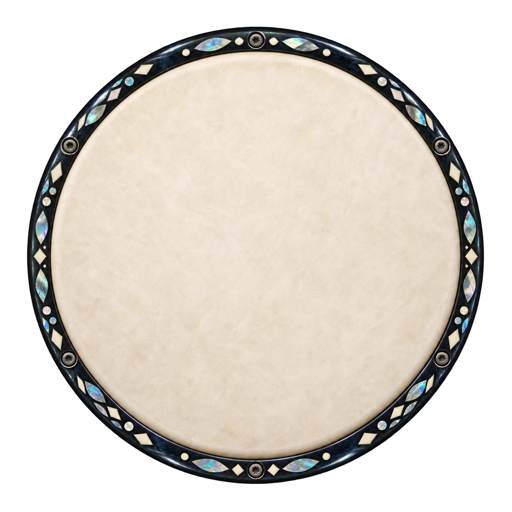
How to choose a darbuka skin.
See where to measure, compare skin photos and reported sounds, and explore Remo, Gawharet El Fan and Powerbeat with Omar Kattan’s demonstration.
Choose a skin that fits your drum, suits the care you can give it and responds comfortably under your hands. For an everyday metal darbuka with tuning bolts, a compatible synthetic head is a practical starting point. For a drum with a tied or glued natural skin, start with the maker’s advice on replacement. Once fit is settled, use your ears to choose the sound.
Start with the drum you already own
Here, “skin” or “drumhead” means the membrane you play. MaqamWorld’s Arabic tabla guide describes traditional clay drums with fish or goat skin secured by glue and woven threads, and modern aluminium drums with replaceable plastic membranes held by a metal frame. Look at your actual mounting system: the label “Egyptian” or “Turkish” does not identify a replacement part. [1]MaqamWorld · الطبلة: natural and replaceable heads (Arabic)maqamworld.com
If you already like the sound, replacing a worn skin with the same model is a sensible first choice. Before buying, check the tuning: Gawharet El Fan recommends trying to retune a plastic skin first. A tear, hole or permanent deformation is a clearer reason to replace it than an unfamiliar logo or a few months of use. [2]Gawharet El Fan · Head compatibility and skin care (English)gawharetelfan.com
Get the fit right before choosing a brand
Record the drum’s maker and model, and any code on the old head. Donizetti’s Turkish replacement guide stresses model-specific sizing. Remo’s chart distinguishes diameter, collar height and hoop type: two heads sold under the same nominal diameter can have different fittings. The collar is the drop from the playing surface to the head’s mounting hoop. [3]Donizetti · Darbuka derisi değiştirme: fitting a new head (Turkish)donizettidarbuka.com[4]Remo · Doumbek drumhead compatibility chart (English)support.remo.com
- Diameter: use the maker’s measuring instructions and specify exactly where you measured. The decorative outer rim and the shell opening are different measurements.
- Collar depth: compare the old head’s side profile with the replacement specification.
- Hoop: check the mounting ring’s width and shape, and its clearance inside the drum’s retaining rim.
- Confirmation: send the supplier the model, old-head code and photographs with a ruler. Ask them to confirm the exact replacement part.
For the removable heads shown here, Darbuka Planet specifies the inside diameter of the head or the outside diameter of the seating lip on the drum. A ruler must pass through the centre: an off-centre line gives a smaller reading. Measure in two directions and tell the supplier if they differ. If the old head is stretched or misshapen, include the bare-shell measurement and model details. [5]Darbuka Planet · Inside head diameter and the shell’s seating edge (English)darbukaplanet.com[6]ArabicDrum · First-hand comparisons of replacement heads (English)arabicdrum.uk
Where to put the ruler
For a removable, bolt-tuned synthetic head. The mint line runs through the centre; its end marks show the edges to measure between.
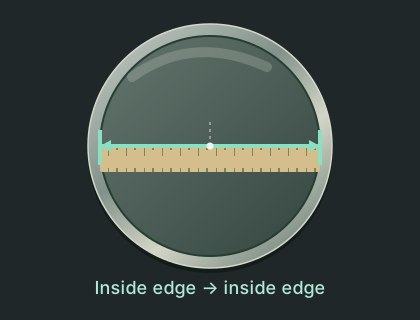
1. Old head: inside diameter
Turn the removed head over. Put the ruler’s zero at one inside edge of the mounting hoop and read the opposite inside edge.
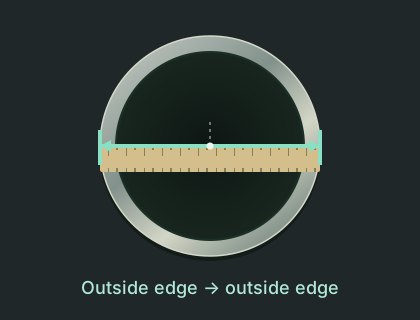
2. Bare shell: outside diameter
With the head and retaining rim off, measure across the outside edges of the lip the head fits over. Include the shell wall.
Record the measurements in millimetres and label each photo. The broad decorative retaining rim is a separate part. These drawings are schematic: confirm the supplier’s measuring method, collar and hoop before ordering.
A useful example: Remo lists the 8¾-inch DX head with a ⅜-inch collar and crimp hoop for Gawharet El Fan. Its R-Series heads use a wider hoop and a ½-inch collar. These are different constructions. Treat shop labels such as “22 cm”, “23 cm” or “Sombaty” as a starting point, then match the part to your drum. Do not force a near fit with the tuning bolts. [4]Remo · Doumbek drumhead compatibility chart (English)support.remo.com
Synthetic, fish or goat skin?
Synthetic heads are convenient for regular practice, travel and changing conditions. Turkish supplier Sala Muzik describes them as generally stable, while natural skin changes pitch and tension with humidity and temperature. Donizetti’s Turkish guide broadly describes synthetic skins as brighter and sharper, and natural skins as warmer. Those are useful starting descriptions; the individual head and drum still matter. Natural skin often needs specialist mounting. Check the particular instrument: even clay drums can have different head systems. [7]Sala Muzik · Materials, heads and care (English)salamuzik.com[8]Donizetti · Natural and synthetic skin sound descriptions (Turkish)donizettidarbuka.com
For a natural-skin instrument, Gawharet El Fan describes thin fish skin as a route to a clear, projecting sound, and goat skin as a supple, resonant option that is easier to source in larger pieces. These are the maker’s broad preferences. The individual skin’s thickness, condition and mounting matter, so ask to hear the actual drum and include fitting in your budget. [2]Gawharet El Fan · Head compatibility and skin care (English)gawharetelfan.com
A fish-skin appearance does not necessarily mean animal skin. Remo’s Skyndeep Fish Skin is a synthetic head with a graphic finish. Choose the material from the specification, then judge the sound and feel; the printed pattern cannot tell you how a head will respond. [9]Remo · DX-Series Skyndeep specifications (English)remo.com[2]Gawharet El Fan · Head compatibility and skin care (English)gawharetelfan.com[10]Power Beat / CPK · ABH-83 specifications (English)cpkinc.com
What the skins look like
Supplier photographs show plain synthetic film, a printed synthetic finish and natural hide. Open a photo for a closer look.
The brown Remo head below is synthetic. Appearance alone cannot identify the material, thickness or sound.
 Open the original photo ↗
Plain GEF film on the left; Remo Skyndeep with a Fish Skin graphic on the right. Both are plastic heads.
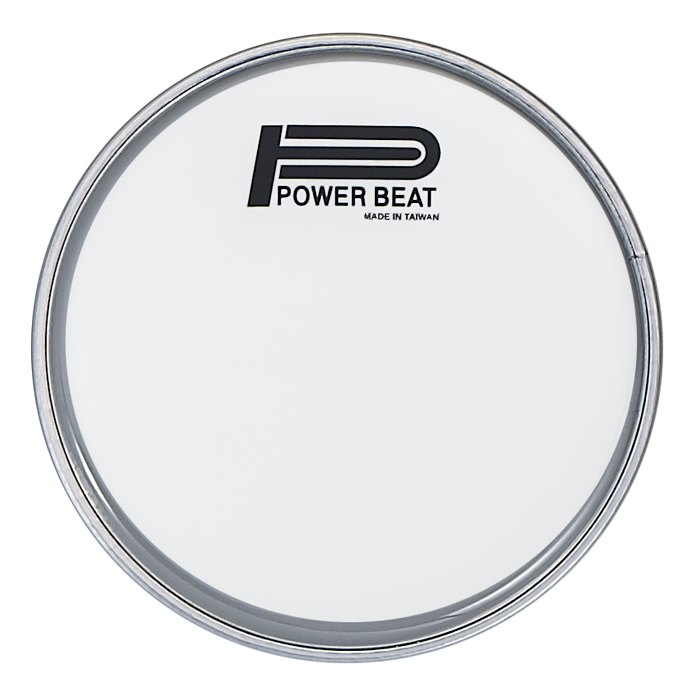 Open the original photo ↗
The clear ABH-83 example. CPK also lists white and black versions at the same stated thickness.
 Open the original photo ↗
Gawharet El Fan’s goat-skin example on a clay darbuka. Natural hides vary in colour, grain and thickness.
Remo, Gawharet El Fan and Powerbeat
These are useful options to compare once you know the fit. The details below come from the suppliers’ own pages; they describe particular products, rather than a universal ranking of brands. [11]Gawharet El Fan · Dark Flower construction (English)gawharetelfan.com[9]Remo · DX-Series Skyndeep specifications (English)remo.com[10]Power Beat / CPK · ABH-83 specifications (English)cpkinc.com
| Option | Why consider it? | What to check |
|---|---|---|
| Gawharet El Fan | A replacement matching your existing GEF head keeps a familiar setup. The maker lists a plastic head with a metal crimplock on its Dark Flower Sombaty. | That example is listed with a 23 cm head. Confirm your own model and size with the supplier. |
| Remo DX-Series Skyndeep | Remo describes a weather-resistant head with a thin crimped hoop for drums with limited clearance under the retaining rim. | Specify the series, diameter, collar and product code. A Remo logo alone does not establish compatibility. |
| Powerbeat / Power Beat | The Power Beat / CPK ABH-83 listing specifies an 8¾-inch, 0.188 mm head in clear, white or black. | Match the exact model and hoop to your drum. Those colour options share the listed thickness; colour alone is no guide to thickness or tone. |
If you want a change, name what you are missing: a fuller Dum, a more distinct Tek, a shorter ring after each note, or an easier response to light finger strokes. Ask for a demonstration of those qualities on a comparable drum. Include delivery and fitting in the price comparison; the most useful purchase is the one you can fit and comfortably play.
How do the different skins sound?
The sources below offer maker and retailer descriptions, including ArabicDrum’s first-hand account of trying heads on different drums. They are listening impressions, not a controlled comparison on one instrument. A ringing Tek continues after the initial strike; an abrupt Tek has a shorter finish. Use those differences to decide what you would like to hear. [6]ArabicDrum · First-hand comparisons of replacement heads (English)arabicdrum.uk[12]Ethnic Musical · الدليل النهائي لجلود دربوكة: supplier’s sound descriptions (Arabic)ar.ethnicmusical.com[13]Darbuka Planet · Gawharet El Fan, Powerbeat and Remo head descriptions (English)darbukaplanet.com[2]Gawharet El Fan · Head compatibility and skin care (English)gawharetelfan.com
| Skin | What the sources describe |
|---|---|
| Gawharet El Fan plastic | Darbuka Planet describes a crisp sound. If you like your drum’s existing GEF head, use that familiar attack as the reference when comparing replacements. |
| Remo Skyndeep | ArabicDrum reports a ringing Tek and a deep, sustained Dum. Ethnic Musical’s Arabic guide describes a warm, resonant response. Listen to how much ring remains between strokes. |
| Powerbeat | ArabicDrum describes a more abrupt, higher Tek than Skyndeep, alongside a deep, sustained Dum. Ethnic Musical’s Arabic guide also emphasises a fuller bass sound. |
| Natural fish skin | Gawharet El Fan favours thin fish skin for clear, projecting sound and sharper high notes. Listen for definition at a gentle touch as well as when playing loudly. |
| Natural goat skin | Gawharet El Fan describes a supple, resonant response and suggests goat skin for a deeper bass emphasis, especially on larger drums. The particular hide and its mounting make a difference. |
These descriptions do not establish a universal winner. ArabicDrum explicitly reports exceptions when changing the shell and head combination. Tension, head size, your touch and the recording setup can change the result. Ask to hear the exact head on a similar drum, and compare both the first attack and the sound that follows it. [6]ArabicDrum · First-hand comparisons of replacement heads (English)arabicdrum.uk
Choose a sound goal before shopping: more ring for spacious phrases, a shorter rim sound for closely spaced notes, or a fuller Dum under an accompaniment. These are listening prompts, not fixed rules about which style belongs to a brand. Do not choose by colour alone: Power Beat / CPK gives the clear, white and black ABH-83 versions the same listed thickness. [10]Power Beat / CPK · ABH-83 specifications (English)cpkinc.com
Watch the change, then compare the sound
Omar Kattan’s “I Replaced All My Darbuka Skins” brings replacement, tuning tips and a sound test together. It is a useful companion to a buying decision because fitting and tuning are part of the result you hear. [14]Omar Kattan · Replacing, tuning and comparing darbuka skins (English)youtube.com
 Watch tutorial
Omar Kattan: replacing and tuning darbuka skins
English tutorial · Solo, Sombaty and Dahola head changes · Starts at 1:16
Watch & try. Watch how the head is seated and tuned, then listen to the sound test. Notice the body of the Dum, the attack of the Tek and the ring after each stroke. Use these as listening questions when trying a head yourself.
Omar Kattan Percussion · Omar Kattan · Replacing, tuning and comparing darbuka skins (English)
Try this short comparison on your own drum: four gentle Dum strokes, four Tek strokes, a slow Tek–Ka alternation and four bars of Maksum. Repeat with a little more energy. Notice how easily the quiet notes speak and whether the low and high sounds remain distinct. If you record before and after a change, keep the room, microphone position and recording level the same. This is a practice check, not a controlled brand test.
Fit carefully and give it a fair trial
For a bolt-tuned head, Donizetti recommends cleaning the seating area and tightening opposite bolts in a star pattern to keep the head centred. Follow your maker’s instructions, use small even adjustments and recheck the tuning after the head settles. Stop if the rim will not sit evenly or the bolts need force to pull the head into place. [3]Donizetti · Darbuka derisi değiştirme: fitting a new head (Turkish)donizettidarbuka.com
Keep the drum away from direct sun, heaters and damp storage. For natural skin, ask the maker how to manage local humidity and tuning: excessive heat can damage the skin or adhesive. Once fitted, play a few familiar phrases at a comfortable volume before deciding whether the new skin gives you the response you wanted. [7]Sala Muzik · Materials, heads and care (English)salamuzik.com
Sources & further reading · 14 references
- MaqamWorld · الطبلة: natural and replaceable heads (Arabic)
- Gawharet El Fan · Head compatibility and skin care (English)
- Donizetti · Darbuka derisi değiştirme: fitting a new head (Turkish)
- Remo · Doumbek drumhead compatibility chart (English)
- Darbuka Planet · Inside head diameter and the shell’s seating edge (English)
- ArabicDrum · First-hand comparisons of replacement heads (English)
- Sala Muzik · Materials, heads and care (English)
- Donizetti · Natural and synthetic skin sound descriptions (Turkish)
- Remo · DX-Series Skyndeep specifications (English)
- Power Beat / CPK · ABH-83 specifications (English)
- Gawharet El Fan · Dark Flower construction (English)
- Ethnic Musical · الدليل النهائي لجلود دربوكة: supplier’s sound descriptions (Arabic)
- Darbuka Planet · Gawharet El Fan, Powerbeat and Remo head descriptions (English)
- Omar Kattan · Replacing, tuning and comparing darbuka skins (English)